Quick answer
Hidden water leak detection traces a leak inside walls, ceilings or cabinets to its source using thermal imaging, moisture mapping and acoustic tools, so only one small opening is needed. It also confirms whether the water is a plumbing leak or from a roof, window or AC line. Calls are answered 24/7 at +13053150618.
Last updated November 2026
Signs of a leak inside a wall
Water inside a wall spreads before it shows. Stains often appear away from the actual leak.
- Brown stains or rings on walls or ceilings
- Bubbling, peeling or soft paint and drywall
- Musty smell or new mold spots
- Warped baseboards or flooring near a wall
- Sound of dripping or running water inside a wall
- Higher water bill with no visible leak
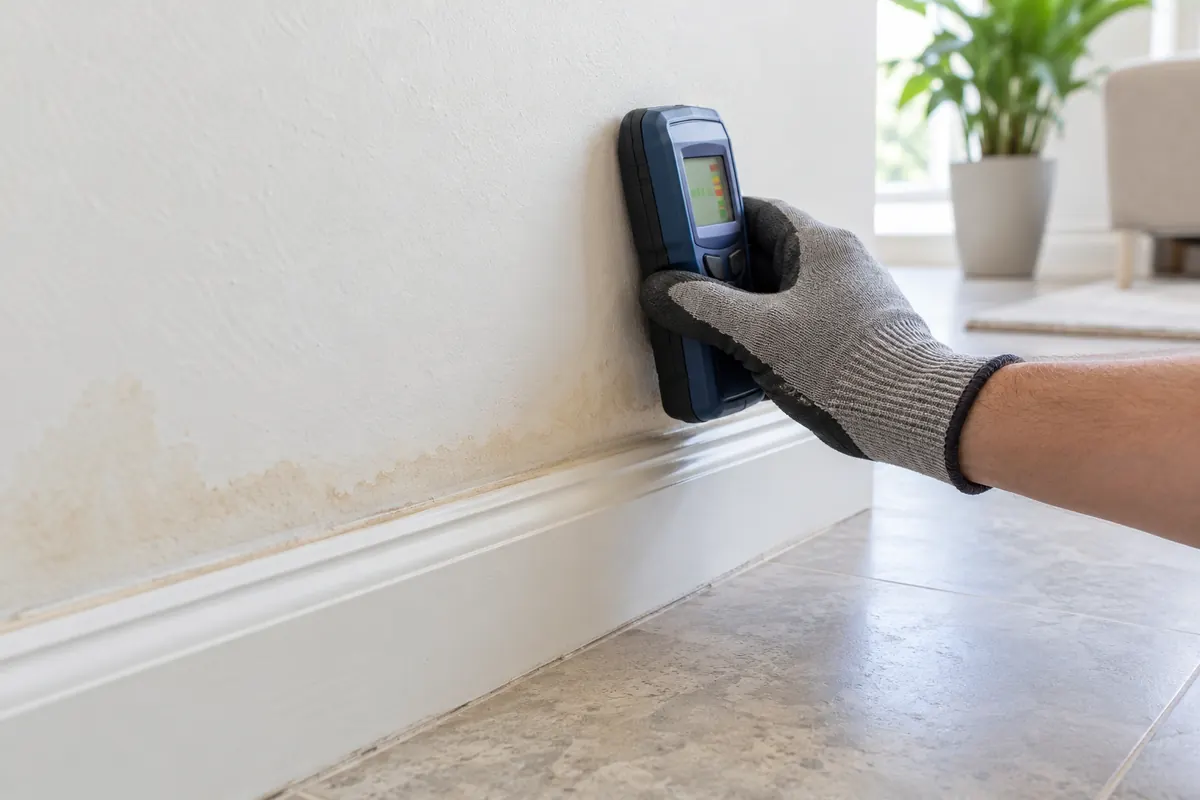
How hidden leaks are found
The goal is one small, targeted opening instead of cutting several holes to look.
Thermal imaging
Infrared cameras show temperature differences, which makes hot-water leaks and wet areas visible behind surfaces.
Moisture mapping
Meters measure moisture in drywall, wood and flooring to trace water back toward its source.
Acoustic listening
Sensitive microphones pick up the sound of water escaping a pressurized pipe, even through concrete or soil.
Pressure testing
Isolating each line and watching for pressure loss shows which pipe is leaking before anything is opened.
Hidden leaks in Coral Gables homes
Humid air and older plumbing make in-wall leaks a common problem in South Florida. Supply lines to bathrooms and kitchens, water heater connections and AC condensate lines are frequent sources.
Not every wet wall is a plumbing leak. Roof, window and AC issues look similar, so confirming the source first saves money. Not sure who to call? Read leak detection vs. plumber.
What to do right now
- 1
Stop what you can
If a fixture is the likely source, close its shut-off valve.
- 2
Protect the area
Move furniture, and photograph the damage for insurance.
- 3
Call for detection
Tell them where the stain is and when you first saw it.
Common questions
How can you find a leak behind a wall without cutting it open?
Thermal cameras, moisture meters and listening equipment show where water is coming from. A small opening is made only at the confirmed spot.
Could the stain be from the roof or AC instead?
Yes. That’s why the source is confirmed first. Plumbing, roof, window and AC condensate leaks can look alike.
Is a small stain worth checking?
Yes. Stains are usually the last sign to appear, and moisture inside walls can lead to mold.